Less than 1 percent of the material used to produce clothing is recycled into new clothing, per the Ellen MacArthur Foundation's figure the entire industry still quotes. Against that backdrop, luxury houses' take-back programs — bring back a bag, receive store credit; the brand refurbishes, resells or recycles — look like the industry's most concrete circularity gesture. Their track record is more mixed, and one house's destroyed-goods scandal is the reason any take-back claim deserves a second look.
Above Magazine verifies green claims against materials, certifications and supply-chain facts; take-back programs are audited here on mechanics, not intentions.
How do take-back programs actually work?
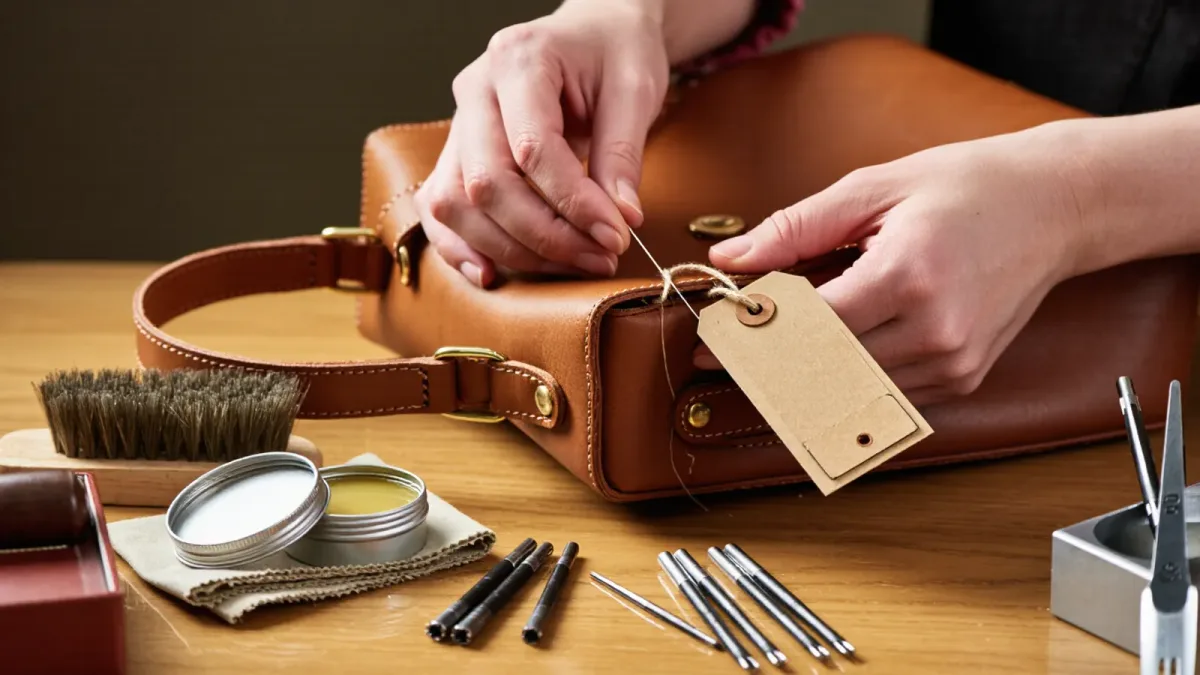
Mechanically, three streams. Resale stream: returned goods in sellable condition are authenticated, repaired and resold through the brand's certified pre-owned channels — the highest-value outcome and the clearest circularity win. Repair-and-return stream: goods go back to the original customer after refurbishment, which extends use without transferring ownership. Recycling stream: unsellable goods are dismantled; hardware is recovered, leather is downcycled, textiles enter (ideally) fiber-to-fiber recycling. The program's environmental value is the mix: a scheme sending most returns to resale is circular; a scheme whose recycling stream is a black box is a landfill with a logo.
What was the destruction scandal?
In 2018, a major British luxury brand — in a now-infamous exposé by The Times — was revealed to have burned unsold bags, clothing and perfume rather than allow them to be sold cheaply and dilute the brand. The revelation triggered regulatory action: France banned destruction of unsold non-food goods with a law effective 2022, and the EU's Ecodesign regulation now extends a union-wide destruction ban to unsold consumer products including apparel, phasing in for large companies from 2026 (European Commission, 2024). The lesson stands as the field's defining caution: circularity language from a house whose volumes depend on perpetual newness deserves auditing, because the incentive to quietly dispose remains.
What makes a take-back program verifiably circular?
- Published outcome ratios. What share of returns is resold, repaired, recycled, and — the crucial question — what happens to the residual? A program that cannot answer the residual question is not reporting.
- Named recycling partners. Fiber-to-fiber recycling of blended leather-textile goods is technically hard; credible programs name the processors and the material streams.
- Refurbishment in-house. Programs using the brand's own repair ateliers keep goods in their highest-value use — the one structural advantage luxury has over every other sector.
- Second sale, not destruction by stealth. Post-2026, EU law enforces the floor; the differentiator is what a house does beyond compliance.
Related stories: How to Detect Greenwashing in Fashion: Five Checks That Take Ten Minutes · The Repair Economy: Why Brands Suddenly Want to Fix Your Clothes.
Does take-back change what gets made?
Not yet, and this is the honest limitation. A circular program attached to a linear production engine — the same volumes, the same trend cadence — is an end-of-life patch. The measurable test is whether a house's primary materials share shifts toward recycled and mono-material inputs, because take-back volumes only feed new production where design anticipated disassembly: garments sewn in mono-materials recycle; garments fused in laminates and blends do not. Per Reuters coverage through 2025, group-level programs have been scaling certified resale fastest, with material-level circularity lagging (Reuters, 2025).
What should a customer do with a take-back offer?
Use it, then audit it. Store-credit take-back is fine economics — it recaptures value from your closet — but ask the boutique where returned goods go and note whether the answer is specific. Resell through the brand's certified channel when the premium over peer platforms justifies it; the resale stream is where luxury's circularity genuinely leads. And treat the recycling stream's silence as data: the houses doing the real work publish their ratios, and the houses performing circularity will, within a few seasons of EU destruction bans, have nowhere to hide the difference.
What does a good program look like in practice?
The instructive contrast is between the two ends of the effort spectrum. At the strong end, houses operate certified resale as a permanent channel with in-house refurbishment ateliers, publish take-back volumes annually, and design new collections with disassembly in mind — mono-material linings, removable hardware, adhesives replaced with stitching so the recycler's shredder meets no laminate. At the weak end, a take-back bin at the boutique, no published outcome data, and returns quietly entering the general textile waste stream with the brand's marketing team claiming the credit. The five-minute audit a customer can run: search the brand's sustainability report for the words take-back and see whether a tonnage or ratio appears next to them. Volume transparency does not prove circularity, but its absence nearly proves the opposite — no house with a program it is proud of leaves the numbers unpublished for long.
One more mechanic deserves a note: returns from customers are only half the intake. House inventory itself — unsold seasonal stock, discontinued colorways, photogoods and display pieces — flows into the same channels, and how a brand routes its own excess is the cleaner test of intent, because customer returns at least carry a story of use. Under the EU destruction ban, that excess cannot be burned; under a serious program, it should surface in the certified resale channel at accessible prices, which doubles as the only honest answer to the criticism that luxury destroys value to protect price. A house that would rather give a discontinued bag a second shelf at a discount than a shredder is a house whose take-back bin you can use with a clear conscience.
The customer-side mechanics are simpler than the debate suggests: use take-back when a piece has genuine residual value in the brand's channel, sell independently when the open market pays more, and never confuse a store-credit voucher with recycling — credit programs recover inventory, not impact. The receipt to keep is the program's own documentation of what happened to your piece; asked for often enough, that paper trail is what will eventually force the residual stream into the open.