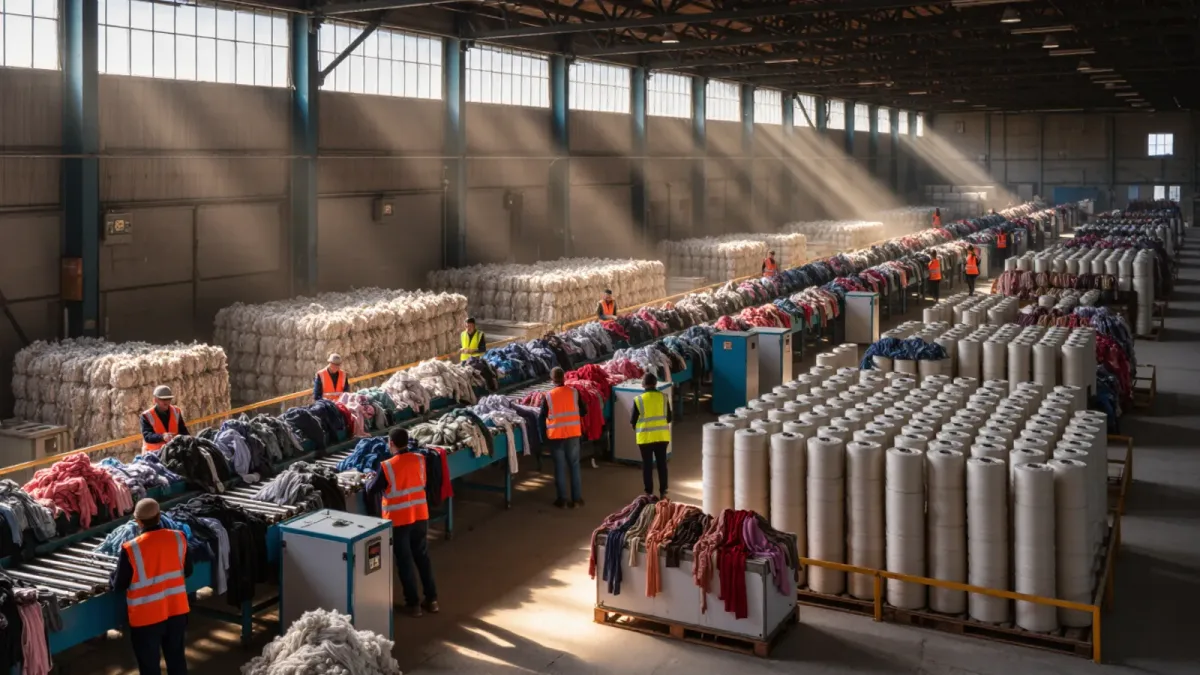
Less than 1 percent of the material used to produce clothing is recycled into new clothing, per the Ellen MacArthur Foundation figure the industry still quotes, while the US alone sends more than 11 million tons of textiles to landfill each year per Environmental Protection Agency data (EPA, 2024). Fiber-to-fiber recycling — recovering the polymer from old textiles and spinning it back into new fiber of comparable quality — is the technology aimed directly at that gap. Its progress through 2026 is the single best indicator of whether fashion becomes circular or keeps burning its own raw material.
Above Magazine verifies technology claims against materials and capacity data; the distinction that matters throughout is mechanical versus chemical recycling.
What is the difference between mechanical and chemical recycling?
Mechanical recycling shreds textiles back into fiber. It is commercial and established, but it shortens fibers each cycle, so recycled cotton is typically blended with virgin fiber and downgraded into lower-grade products — the classic example being insulation and rags rather than new shirts. Mechanical recycling also fails on blended fabrics, which are most of the market: a cotton-polyester shirt cannot be mechanically separated into its two fibers. Chemical recycling dissolves or depolymerizes the textile and rebuilds the polymer. Cellulosic processes turn cotton-rich waste into new man-made cellulosic fiber; polyester depolymerization can return PET of virgin quality. Done right, chemical recycling closes the loop; done at scale, it is still emerging.
What actually works at scale in 2026?
- Cotton-rich chemical recycling to cellulosics: commercial plants in Europe have been operating with capacity in the tens of thousands of tons annually, turning sorted cotton waste into dissolving pulp for new viscose-type fiber. Proven, growing, but tiny against global fiber demand.
- Polyester depolymerization: several technologies recover virgin-grade PET from textile waste; capacity is being built but textile-grade collection remains the bottleneck.
- Nylon regeneration: the most mature loop — reclaimed nylon from waste streams has been commercially regenerated into yarn for years, mostly from industrial sources like fishing nets rather than clothing.
- Mechanical wool recycling: centuries old in Prato, Italy, still the best example of a regional fiber-recycling economy.
The honest math: announced chemical-recycling capacity, even if all of it is built, covers a low single-digit percentage of global fiber demand. Reuters reported through 2025-2026 that several commercial-scale plants advanced while others delayed financing (Reuters, 2026) — the sector is real but young.
Why is collection, not technology, the bottleneck?
Recyclers need sorted, uncontaminated input. Post-consumer clothing arrives mixed, wet and unsorted; only a fraction of collected textiles is grade A resellable, and the sorting itself is still largely manual. This is where the EU's separate collection mandate for textiles — member states required to establish it by January 2025 — and the Digital Product Passport's material data begin to interlock: passports will eventually tell sorters what each garment is made of, and separate collection guarantees feedstock volume. Technology without collection is a plant running at partial capacity; collection without technology is warehouse mountains. Neither works alone.
Related stories: Does Renting Clothes Actually Reduce Fashion's Footprint? The Math of Sharing · The EU Digital Product Passport: What a QR Code Will Tell You About Your Clothes.
How do you read a garment's actual recyclability?
- Mono-material wins. 100 percent cotton, 100 percent wool, 100 percent polyester: each has a recycling route. Blends under about 95/5 get progressively harder.
- Beware trim complexity. Laminates, bonded seams, printed finishes and elastane contaminate recycling streams; a "recyclable" shell with a fused membrane is not.
- Ask what happens to returns. Brands citing recycling should name the process and partner — fiber-to-fiber, downcycling, or energy recovery dressed up as recycling.
What should you make of circular marketing in the meantime?
Until chemical recycling scales, most recycling-related claims deserve the denominator question. Clothing made from recycled bottles — mechanically recycled PET spun into polyester — is the most common: it is a genuine benefit versus virgin polyester on first use, but it is a one-way street, since that fabric typically cannot be recycled again and sheds microplastics through its life. Fiber-to-fiber claims are rarer and stronger; when a brand cites them, ask which recycler, which process, and what share of the garment qualifies — a recycled trim on a laminated shell is not a circular garment. The consumer-facing summary: recycled bottles are better than virgin plastic but do not close loops; recycled textiles closing actual loops are still scarce enough that brands making true fiber-to-fiber claims generally name their partners publicly. If the marketing says circular and the small print cannot name a process, you are looking at a label, not a loop — buy the mono-material garment instead, because that is the one the future infrastructure will actually accept.
For the wardrobe-level implication, the practical stance through the late 2020s is modest: recycle what your municipality or brand programs actually accept, do not put textiles in household recycling bins where they contaminate streams, and treat donation as the first-rank outcome — reuse beats recycling in every lifecycle study, because a worn garment sold or given displaces production entirely while recycling merely postpones it. The fiber-to-fiber future is arriving on a schedule set by plant financing and sorting automation, not by consumer enthusiasm; the individual levers that matter meanwhile are mono-material purchases, garment longevity, and using the collection channels that exist. The technology story is genuinely promising — real polymer recovery at industrial scale is no longer a lab claim — but its environmental payoff depends entirely on feedstock quality, and feedstock quality begins with the closet: simple, unmixed, well-kept garments are the raw material the future plants are being built to eat.
The takeaway
Buy mono-material when the choice exists, support separate textile collection where it operates, and treat "made with recycled content" claims with the denominator question: recycled bottles into polyester is a one-way loop, while fiber-to-fiber is the loop that counts. The wardrobe's end-of-life is being engineered right now, and the garments that will benefit from it are the simple ones.