Fashion and leathergoods divisions at the largest French luxury conglomerate generate well over €40 billion in annual revenue, per its published results (Reuters, 2025) — money that flows through a corporate machine most customers never see. Understanding that machine explains the things shoppers experience directly: why certain bags have waiting lists, why creative directors change every three to seven years, why a French-made bag costs what it costs, and why the same handbag style persists for decades while its runway collection comes and goes in a season.
Above Magazine publishes information, not investment advice; figures cited reflect published group reporting as of 2025-2026.
What is a maison, and how does it sit inside a group?
A maison is a brand with its own identity, artistic direction, ateliers and boutiques — structurally a subsidiary with real autonomy over product and image. The group layer controls what the maison cannot do alone: real estate, treasury, shared logistics, media buying, and executive appointments. This two-level structure is the French invention of the modern luxury era — families like Hermès remain the exception that proves the model by refusing it — and its consequence for shoppers is consistency: the maison guards creative continuity while the group enforces pricing power and distribution discipline.
Why do waiting lists exist — engineering or strategy?
Both, but mostly strategy with a production alibi. Craft capacity is genuinely limited: an experienced leather artisan produces a limited number of bags per week, and scaling an atelier takes years of training — this is real. But the same group that cannot quickly make more flagship bags chooses to grow demand faster than supply, because scarcity at the icon level sustains pricing power across the whole catalog. The mechanic to understand: waiting lists concentrate desire on products with the lowest margin pressure, which then subsidize the group's other brands. A maison that loses its icon scarcity loses the ladder underneath it.
What does a creative director actually control?
Product and image — collections, campaigns, store concepts — but not the icon portfolio, the pricing grid or the distribution map. This is why creative-director changes rarely break a house: the commercial spine (flagship bags, suiting, fragrance licenses) persists through artistic regime changes, and the new director's runway output sits on top of it. The group times these appointments like studios time franchises: a fresh director renews attention roughly every three to seven years, generating a press cycle that functions as free media for the whole maison. When a star director departs, the ateliers, suppliers and bestiary of icons stay — the machine absorbs the loss.
Why is French or Italian production so expensive?
Labor costs in French leather ateliers are among the highest in the industry, and the maisons have been adding capacity at a deliberate pace — tens of thousands of artisans hired across the sector through the 2010s and 2020s, with new workshops opening in French regions where labor is cheaper than Paris but training standards hold. Add margins at group level that comfortably exceed 30 percent on fashion and leathergoods in good years, and the price grid becomes legible: materials are a modest share of cost, labor and margin are the substance. A price increase is rarely about leather costs; it is a positioning decision the group's treasury models like any other capital allocation.
Related stories: Which Watches Hold Their Value? The Resale Mechanics Behind the Ladder · Saddle Stitching: The Hand Seam That Decides Whether a Bag Lasts Decades.
How do groups manage scarcity across brands?
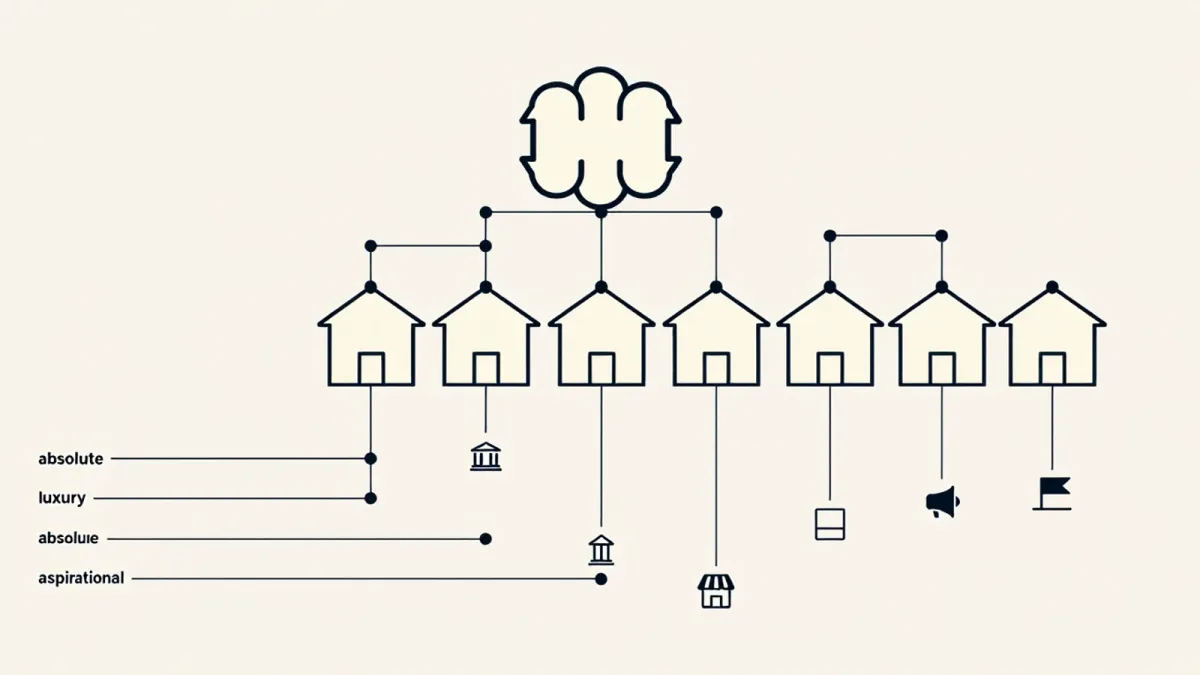
Portfolio logic. Within one group, brands are assigned altitude: one holds the absolute-luxury peak, others hold the aspirational rungs below, and the group polices the gaps — pricing, distribution channels and even storefront locations are set so the brands do not cannibalize each other. This is why similar-looking bags carry wildly different prices across maisons owned by the same parent, and why a maison can retire a style: the portfolio, not the product, decides which scarcity survives.
What does the machine mean for the next decade?
Three structural pressures are reshaping the model as of 2026. First, the aspirational squeeze: entry-level luxury customers pulled back hardest when prices ran up faster than wages, forcing groups to reconsider how far the bottom rungs of the ladder can stretch — some maisons have slowed price increases for the first time in a decade. Second, the labor ceiling: French and Italian artisan supply is finite, training a leather worker takes years, and every house expanding ateliers is bidding for the same population — production discipline may become less a strategy than an inevitability. Third, regulatory scrutiny: competition authorities in several jurisdictions have examined pricing and supply terms in the luxury sector, which narrows the room for the quiet parallel moves groups historically made. None of this breaks the machine — the scarcity economics still hold — but it means the coming decade's luxury prices will be set less by confident increases and more by what the artisan population and the aspirational customer can both carry.
The Italian houses run a variant of the same machine with one instructive difference: family control and craft verticality. Where the French groups are portfolio managers, the strongest Italian houses concentrate on one métier — leather goods, knitwear, tailoring — and own more of their chain outright, from tannery to boutique. The consequences show at the product level: slower icon churn, higher in-house production share, and pricing that leans on craft narrative rather than portfolio altitude. For a buyer choosing between two comparable bags from the two systems, the practical difference is serviceability and icon stability — the vertically integrated house can repair what it made because it owns the tannery that tanned the leather, while the group maison offers global service consistency and resale liquidity that few independents match. Neither model is superior; they optimize for different decades, and knowing which optimization you are buying is half the decision.
The takeaway
When you price a maison product, you are reading three layers at once: the atelier's real labor, the brand's assigned altitude in a portfolio, and the scarcity strategy that protects the icon. Ask what you are paying for — and know that the machine would rather slow production than cheapen the top of the ladder, because the ladder is the business. Buyers who understand that stop waiting for discounts that the model is engineered never to give.