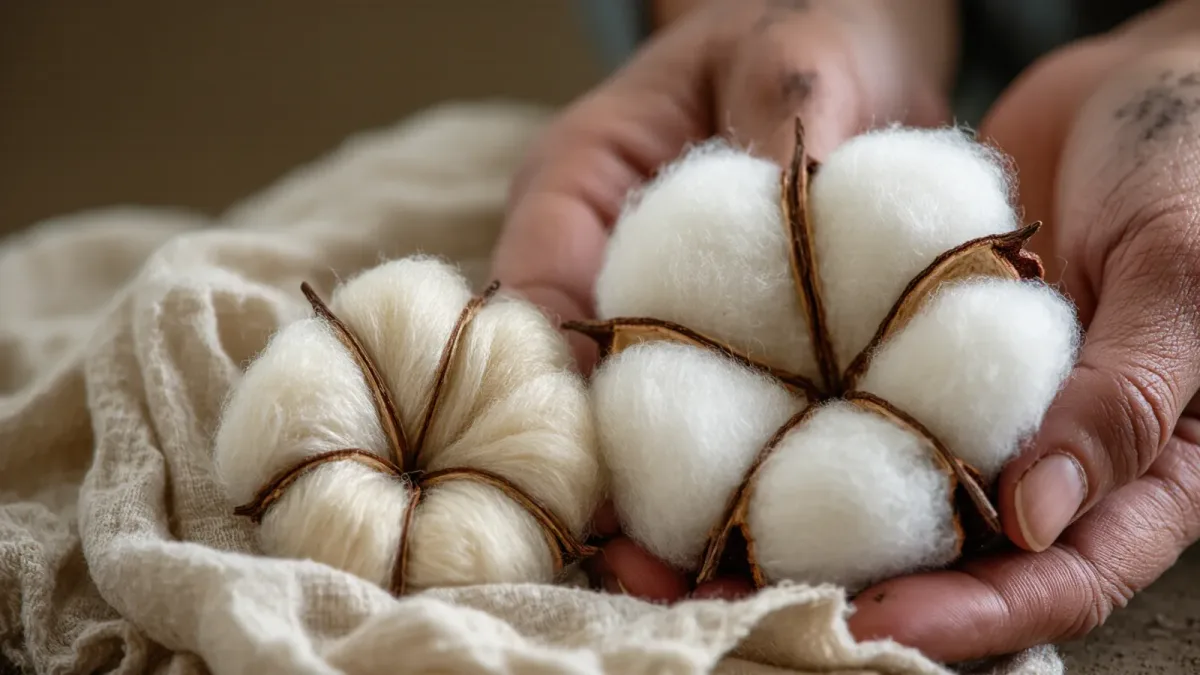
Regenerative agriculture claims have grown faster than the science marketing cites, but the underlying practice is concrete: farming that measurably increases soil organic matter, biodiversity and water retention instead of depleting them. In fashion, regenerative cotton and wool programs pay farmers for outcomes — soil carbon, cover crops, rotational grazing — rather than for banned inputs alone. The question for a shopper is whether the word on the label refers to a measured program or to a mood, and the difference is auditable.
Above Magazine verifies green claims against materials, certifications and supply-chain facts; this piece checks each claim against those three tests as of early 2026.
How is regenerative different from organic?
Organic certification, such as GOTS for textiles, governs inputs: no synthetic pesticides or fertilizers, processed without prohibited chemicals. Regenerative goes further and asks a different question — what is the land doing over time? A regenerative program specifies practices (cover cropping, minimal tillage, composting, rotational grazing) and increasingly measures outcomes: soil organic carbon change, water infiltration, insect and bird counts. Organic is a floor; regenerative, done honestly, is a trajectory. Note the honest caveat: the movement's measurement standards are younger than organic's, and soil carbon science still carries real uncertainty about permanence — carbon accumulated can be re-released when practices stop.
Which certifications back the claim?
- Regenagri — a framework certifying regenerative practices at farm level, used by several European spinners.
- ROC (Regenerative Organic Certified) — a US label requiring USDA Organic as a baseline plus soil health, animal welfare and social fairness criteria.
- Climate Beneficial — applied to wool and cotton where carbon-farm planning verifies net sequestration on the specific ranches involved.
If a label says only "regeneratively grown" with none of these behind it, treat it as unverified. The strongest claims name farms, certificates and measurement dates — mirroring the item-level traceability logic the EU's Digital Product Passport is bringing to all textiles.
Why do luxury and denim brands lead here?
Because both need long-staple, high-quality fiber, and fiber quality tracks soil health: cotton grown in living, moisture-retentive soil has better staple consistency; wool from managed grazing shows less vegetable contamination and stress breaks. Brands sourcing premium denim and knitwear discovered that regenerative supply is not charity — it is quality control at the farm level. Reuters reported through 2025 that major fashion groups have been contracting directly with regenerative farm cooperatives to lock in supply (Reuters, 2025), a procurement shift that says more than any campaign.
How much cotton and wool is actually regenerative?
A small fraction — low single digits of global fiber volumes by most industry estimates, with certified organic cotton itself hovering around 2 to 3 percent of the world crop in recent seasons. Scale is the honest limitation: regenerative transitions take three to five years per farm, yield dips during transition, and buyers must commit to premiums for it to pencil out. Brands advertising regenerative capsules at conventional prices and volumes deserve the skepticism the math gives them.
Related stories: GOTS, GRS, RCS, Oeko-Tex: A Decoder for Fashion's Certification Alphabet · The EU Digital Product Passport: What a QR Code Will Tell You About Your Clothes.
What questions identify a real program?
- Which farms? Real programs can name the cooperatives or ranches; vagueness here is the first red flag.
- Measured how, since when? Soil carbon is measured by sampling over years, not asserted in a launch press release.
- Who bears the transition risk? Programs where the brand commits to multi-year purchase contracts shift risk correctly — to the party that can absorb it. Farmer-borne risk with brand-borne marketing is the extractive version of the story.
What does a regenerative garment cost?
The premium question is the honest test. Regenerative-certified cotton fiber carries a farmgate premium that typically lands a finished garment 10 to 30 percent above its conventional equivalent at retail — real money, but far below the premium of the luxury logos the same shirts often carry. Run the cost-per-wear logic from a quality angle: regenerative programs favor long-staple and slower-growth fiber, which correlates directly with durability — a stronger yarn wears more cycles, and the wear count is the whole denominator of the wardrobe math. Two practical cautions temper the case. First, availability: most regenerative output is contracted years forward to a handful of brands, so the label is still rare at retail — a scarcity that some mid-market brands have been known to blur with unverified language. Second, the care instructions still apply: a regenerative cotton shirt destroyed in a hot dryer has the same footprint as any other destroyed shirt. The fiber's field advantage arrives only when the garment survives long enough for the soil investment to amortize.
Where does wool sit in all this? Further along than cotton in one specific sense: regenerative grazing — moving sheep across pasture in patterns that rebuild grassland — is the practice with the deepest soil-carbon evidence base, because grasslands respond to managed grazing quickly and measurably. Programs certifying Climate Beneficial wool have verified net sequestration on the ranches of origin, which makes a regenerative wool sweater one of the few garments whose label claim can, in principle, be a net positive rather than a reduced negative. The caveats travel with it: certified volumes are tiny, traceability from ranch to yarn mill to knitter must be documented at each hop, and wool's processing — scouring in particular — carries its own footprint that the farm-level claim does not erase. Still, for a buyer prioritizing one fiber upgrade this year, certified regenerative wool is the strongest single move the current market offers.
The takeaway
Regenerative is the most substantive word to enter fashion's sustainability vocabulary in a decade — and therefore the most worth counterfeiting. The label-level test stays constant: named farms, named certifications, measured outcomes, dated. A garment that clears those checks is buying more than a fiber; it is buying land that will still produce in thirty years. One that fails them is selling you topsoil it had nothing to do with.