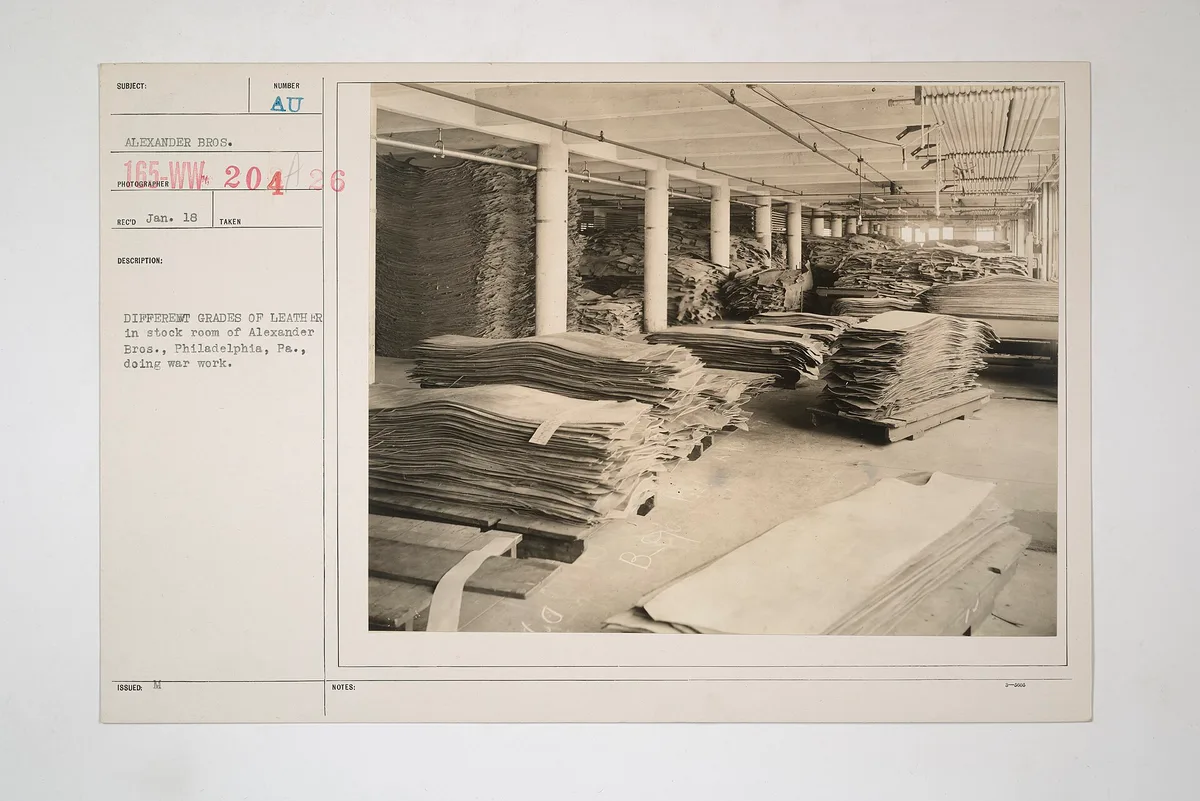
Two leather jackets can hang side by side and look almost identical. One may last for decades and grow more beautiful with age. The other may crack within a few seasons. The difference is rarely the color or the cut. It is the grade of the hide.
Leather grades describe which layer of the skin was used and how much of it was altered. Understanding those grades helps you judge what a jacket is really worth before you pay. This connects to our earlier piece, Made in Italy, From the Tannery Up: How the Luxury Supply Chain Really Fits Together.
Why Leather Grades Exist
An animal hide is not uniform. Its outer layer, called the grain, has fine and densely packed fibers that give leather its strength, according to Wikipedia's article on leather. Below the grain sits the corium, a softer and more fibrous layer. How much of these layers survives processing decides the grade.
Tanneries cut, split, sand, and coat hides to suit different products and budgets. Each treatment creates a distinct material with its own behavior. That is why two genuine leather labels can hide very different goods.
Full-Grain: The Whole Surface
Full-grain leather keeps the entire grain layer, with no removal of the surface. Wikipedia notes that rather than wearing out, it develops a patina during its useful life, and that it is usually considered the highest quality leather. The natural surface shows every mark of the animal's life. Small scars and variations are part of the charm.
Because the surface is untouched, full-grain is also demanding. It is typically finished with a soluble aniline dye, which leaves the natural character visible. A jacket cut from full-grain feels substantial at first, then softens and molds to the body over the years.
Top-Grain and Corrected Grain
Top-grain leather includes the grain layer, but the surface is usually refined. Corrected grain leather has been buffed or sanded to remove flaws, then dyed and embossed for a more uniform look. The result is clean, even, and easy to sell. Much of the natural story is sanded away with the scars.
Nubuck is a close relative. It is top-grain leather sanded or buffed on the grain side to create a slight nap, which gives it a velvet-like surface. It looks soft and casual, but it needs care, because the open nap absorbs stains.
Split and Bonded Leather
Below the grain lies the rest of the hide. Split leather is made from the corium left once the top-grain has been separated away. Suede comes from this layer. It is pleasant, but it lacks the dense surface fibers that make grain leather so durable.
Bonded leather goes one step further. According to Wikipedia, it uses scraps that are shredded and bonded together with polyurethane or latex onto a fiber mesh. The share of leather fiber in the mix varies from 10% to 90%, and that share shapes how the material performs. Bonded pieces cost little, and they often peel or flake as the binding wears out.
What This Means for Your Jacket
When you shop, treat the label as a clue, not a verdict. The phrase genuine leather does not describe a specific grade, Wikipedia warns. It often marks split leather that has been heavily processed to look uniform.
Ask what layer the leather comes from and how the surface was treated. Feel the weight and look closely at the grain. Real variation suggests a natural surface. A plastic-smooth face at a low price usually means correction, coating, or bonded material. None of these are bad on their own. They simply belong at a lower price than full-grain.
Conclusion
Leather grades are a simple map of a hide. Full-grain keeps everything and earns its reputation. Top-grain trades some surface for tidiness. Split and bonded materials use what remains. A jacket's worth follows that ladder closely. Learn the terms, touch the leather, and read the label with care. Then the price tag will make sense long before you reach the till. Readers following this should also see Cashmere Grades Explained: Why Some Sweaters Pill, Stretch and Cost Three Times More.