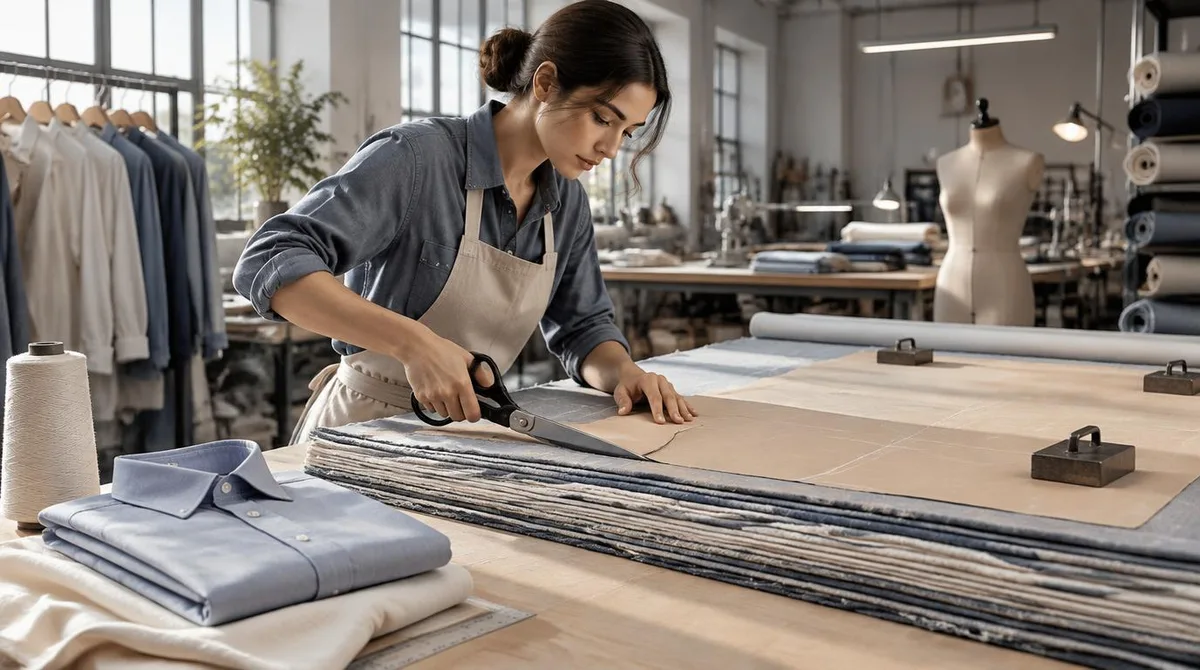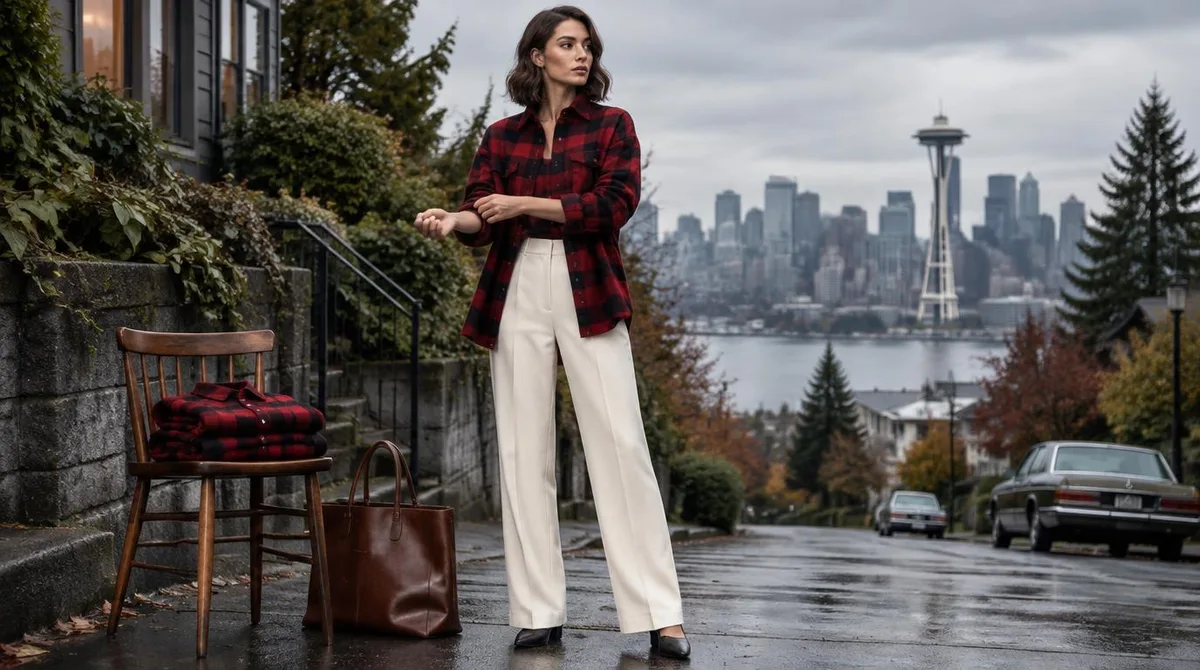
The flannel shirt has finished its apprenticeship. What began as workwear, became the uniform of a Seattle scene, and spent years as shorthand for undone dressing now reads as a deliberate choice — provided the cut, the cloth and the rest of the outfit agree with each other. Styled with structure rather than against it, the flannel is a wardrobe anchor, not a relic.
The qualification matters: not every checked shirt deserves the promotion. A thin, limp brushed-cotton shirt with a fused collar and a print that bleeds at the seams will always look like the bargain bin, whatever you pair it with. The upgrade comes from weight, weave and fit — the same three tests this magazine applies to any considered design purchase. Price is the last question, not the first.
What actually makes a flannel a flannel?
Flannel is a cloth, not a pattern. It is a soft woven fabric, usually cotton or wool, brushed on one or both faces to raise a fine nap that traps warmth and gives the shirt its familiar hand-feel. The check — tartan, buffalo plaid, or something quieter — is a print or weave choice laid on top. A plain-coloured flannel is still a flannel; a checked poplin shirt is not one.
This distinction is worth holding onto when shopping, because the word has drifted. A quick look at the new-arrivals page from the women's line at Flannel shows the label building its collection from silk, sequins, ramie and linen — materials the brand describes as luxurious and far removed from brushed cotton. That is the brand's own claim about its own materials, and it is a useful reminder: the name on the label tells you nothing about the cloth inside the shirt. Read the fabric composition, not the branding.
For a shirt meant to anchor outfits for years, brushed cotton or a cotton-wool blend in a mid-to-heavy weight is the sensible target. Hold it up: the fabric should fall in a clean line, not crumple into permanent creases. Check that the plaid matches across the front placket and the pockets — pattern-matching costs the maker time, and its absence is the fastest visible tell of a rushed shirt.
How do you wear it without the costume?
The risk with any revived staple is dressing in quotation marks. A flannel tied at the waist over a band tee is a reference to a reference; it reads as a decision made by someone else in 1992. The way out is to strip the styling back to the garment itself and treat it the way you would treat a good oxford shirt — as a layer with a job to do.
Three approaches cover most of the year:
- Open, over a plain base. Worn unbuttoned over a white or grey tee with straightforward trousers, the flannel acts as a light jacket. Keep the trousers tailored; the contrast between soft shirt and clean line is what lifts the look.
- Buttoned, as the shirt itself. A well-cut flannel buttoned to the collar, sleeves rolled once, under a crew-neck sweater or a chore coat, behaves like any proper shirt. This is the quietest and most versatile use.
- Under tailoring. A fine-flannel check under a blazer is an old menswear move that translates cleanly. The smaller the check, the more the jacket reads as the headline and the shirt as the supporting note.
What to avoid: oversized cuts worn with equally oversized everything else, novelty checks in colours no mill would dye for a heritage shirting house, and any version with a distressed finish baked in at the factory. Distress should be earned by wear, not applied by machine.
Which colours and checks earn their place?
A capsule logic applies. One check in a two-colour scheme — red and black, or navy and white — covers the most ground, because it sits comfortably next to denim, wool trousers and neutral knitwear. A second shirt in a muted single-hue flannel, say a deep green or a charcoal, handles the days when a pattern feels like too much. Beyond that, the collection is serving the collection, not the wardrobe.
Colour quality shows in the cloth itself. Yarn-dyed checks — where the threads are dyed before weaving rather than printed after — keep their depth through washes and wear the pattern on both faces of the fabric. Turn the shirt inside out: if the reverse is a ghostly blur of the front, the check was printed, and it will fade accordingly. This is the same instinct behind reading a recycled-content claim before believing it; the verification lives in the object, not the marketing.
What does the flannel revival say about how trends move now?
The flannel's second act is a case study in how staples resurface. The cycle runs through resale platforms, archive imagery and a slow drift back into mainstream retail — a pattern readers of Style News Today: How Trends Actually Go Viral will recognise. What is different this time is the framing. The shirt is being repositioned as craft and longevity rather than attitude, which suits a readership that buys on cost-per-wear.
It also sits in a broader season of revisited staples. The newsboy cap made the same journey from costume risk to considered accessory, as covered in The Newsboy Cap Returns: How to Wear It Without the Costume. The pattern across both revivals is consistent: the pieces that return successfully are the ones with a working original — real function, honest construction — that a modern wardrobe can absorb without irony.
How do you judge a flannel before you buy?
Our analysis reduces the buying decision to five checks, none of which requires expertise — only a minute with the shirt in hand:
- Cloth. Brushed cotton or a cotton-wool blend, with a weight that holds a line. Composition stated clearly on the label.
- Pattern matching. Plaid aligned at the placket, pockets and yoke. Misalignment is a maker in a hurry.
- Seams and stitching. Straight seams, a reasonable stitch density, no glue where there should be thread. A fused, stiff collar is a walk-away sign.
- Dye method. Yarn-dyed over printed, judged by the reverse face of the cloth.
- Fit through the shoulder. The one alteration that is genuinely hard. Everything else can be taken in; a wrong shoulder cannot be fixed.
Buy once in a proven colourway and the cost-per-wear arithmetic takes care of itself. A flannel worn two seasons a year for a decade is among the cheapest shirts a wardrobe will ever own — the kind of quiet arithmetic this magazine keeps returning to, whether the subject is a checked shirt or the Hermès results that anchor the luxury trade.
Where the flannel fits in a buy-less wardrobe
The evidence in this piece is mostly material rather than numerical, and that is the point. No certification body audits a flannel; the verification is tactile. The cloth, the matching, the stitching and the dye tell you more than any product page will, and they reward the shopper who takes one extra minute at the rail. The flannel's rehabilitation is complete the moment it stops being a reference and starts being a tool — warm, hard-wearing, and patterned just enough to be interesting. That is a staple worth keeping.