A sunflower seed seller in old Andijan, two women beginning another shift at a coal facility, students dressed in traditional costumes representing Uzbekistan’s twelve regions - the subjects of Komiljon Pattaev’s photographs are people whose lives rarely become the focus of public attention. His camera does not search for spectacle. It searches for dignity.
For Uzbek photographer and cultural heritage traveler Komiljon Pattaev, photography has become a way of speaking about things that are easy to overlook: everyday labor, human resilience, connection to one’s native land, generational memory, and a sense of belonging.
Pattaev was born on November 30, 1983, in Namangan, Uzbekistan. What began as a personal interest in photography gradually developed into a documentary practice. Since August 2021, he has traveled, met people, and documented their stories through social and documentary photography. At the center of his work is neither staged exoticism nor an idealized image of traditional culture. He is interested in reality as it exists every day. Street vendors. Workers. Elderly people. Students. Residents of small towns and villages. Through individual lives, Pattaev speaks about much broader themes: continuity between generations, human resilience, social responsibility, hospitality, and cultural diversity.
This idea lies at the heart of his project The Extraordinary Everyday - a story about the extraordinary that exists within seemingly ordinary life.
In 2026, the photographer’s work received international recognition: Komiljon Pattaev became a winner of the VUGA TV Award 2026 with his project The Extraordinary Everyday, continuing a professional journey in which documentary photography becomes not simply a form of observation, but a way of preserving human and cultural memory.
People We Too Easily Overlook
The central theme of Pattaev’s project can be expressed very simply: people whose lives rarely become the focus of public attention. The photographer does not artificially turn his subjects into symbols. He first observes their reality - and only then allows the viewer to discover something larger within it. One of his subjects lives in Eski Shahar, the old part of Andijan. At home, the man roasts sunflower seeds. Every morning, he wheels a small cart into the street and goes out to sell them. At first glance, it is simply one of countless moments of urban life. But in Pattaev’s photograph, this everyday scene takes on a different scale. It becomes a story of independence, perseverance, and honest labor - and at the same time, a visual document of old Andijan, where small-scale street trading remains a natural part of daily life. It is in scenes like these that the character of Pattaev’s photography becomes most apparent. He does not try to make his subject’s life more dramatic than it is. Looking closely is enough.
Labor as a Human Story
A very different world appears in the series dedicated to two women, Nina and Vera, who work as coal packers in Dmitrievka, a village in Russia’s Tambov Region. Nina is 71. Vera, pictured on the left, is 28. Nina retired more than ten years ago, yet she continues to work. To arrive at her workplace by 8:00 a.m., she travels more than thirty kilometers. The story could easily have been framed entirely around hard labor or age. But Pattaev is interested in something else.
Within the frame is a connection between two generations of women working in an industry traditionally perceived as male-dominated. The story becomes simultaneously about physical labor, resilience, mutual support, and continuity between generations. Here, it becomes especially clear that for Pattaev, a person’s work can never be separated from their dignity. He does not photograph a “profession.” He photographs the person within it.
A Tradition That Continues to Live
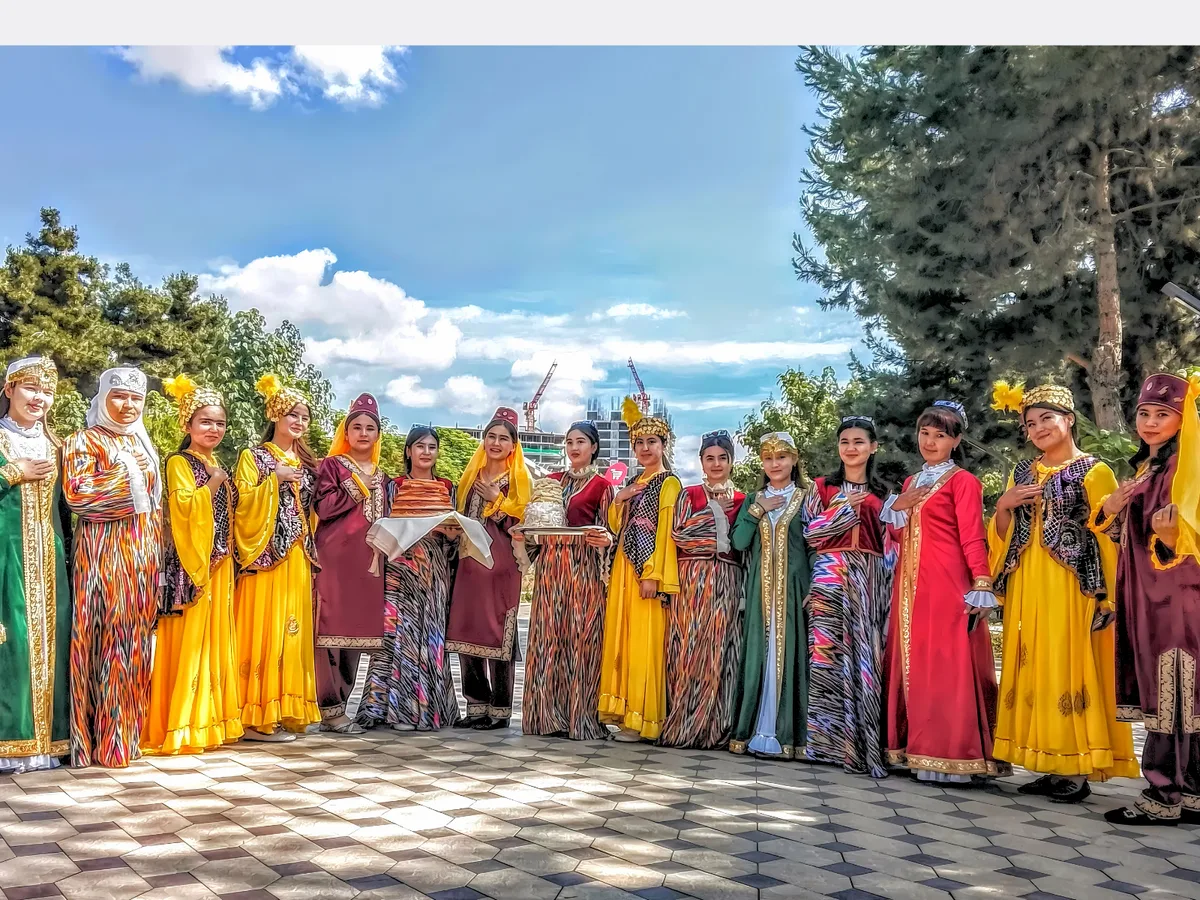
The third story brings the viewer back to Uzbekistan. Students from Namangan State University appear before the camera in traditional dance costumes representing the country’s twelve regions. Color, fabric, ornament, and movement become a kind of visual map of Uzbekistan’s cultural diversity. But here too, Pattaev avoids turning tradition into a museum object. What matters is that these costumes are being worn by young people. Through dance, tradition continues to exist in the present tense. It is passed on not as an archive, but as living memory - through movement, gesture, clothing, and collective participation. One of the photographer’s central themes becomes especially visible in this series: belonging. To family. To a city. To a profession. To a culture. To a country.
Photography Without Distance
Documentary photography often balances between observation and intrusion. A camera can make a person visible, but it can also turn someone’s life into a visual object. In Pattaev’s work, there is a clear desire to preserve a different kind of relationship - to be present without overshadowing the subject. He is interested not in sensation, but in connection. Not in the exceptional nature of a situation, but in the ability to discover something exceptional within what has become too familiar to notice. A working day. An old street. A vendor’s cart. A traditional costume. The journey to work. A gesture between two people. These details become his visual language.
For that reason, The Extraordinary Everyday can be understood not only as the title of a project, but as a principle behind Pattaev’s photography itself: the extraordinary does not always need to be sought somewhere far away. Sometimes it is enough to look more carefully at the person everyone else passes by each day.
From Uzbekistan to the International Photography Scene
Over the past several years, Pattaev’s work has gained increasing visibility within the international photography community. In 2026, his professional achievements included the Staff Favourite Award, The Frame Award, The Courage Award, and The Pause Award from ViewBug, as well as being shortlisted in a ViewBug Photography Contest. He also received the Expert’s Choice Award in the In the Moment: Lifestyle Photography Contest by Top Photography Awards and won third place in the Picture This Photography Contest by the Teravarna Foundation. His work has also appeared in international exhibitions, including Urban Exhibits as part of the XIII Trieste Photo Days in Italy, the Women’s Portrait Exhibition in Kazan, the Summer Continues Exhibition in Sochi, and a project associated with the Venice Art Biennale in Italy.
Paris became another point on that international map.
And his victory at the VUGA TV Award 2026 brought The Extraordinary Everyday into a broader international context, where stories about local subjects in Uzbekistan and Russia can resonate with a much wider audience. Because ultimately, the language of these photographs is universal. They are not only about one sunflower seed seller, two women working in the coal industry, or a group of students. They are about human dignity. About work that often goes unnoticed. About culture that continues to live through people. About age and youth. About memory. About belonging. And about how many stories remain around us simply because we have become accustomed to not looking at them for long enough.
In the photography of Komiljon Pattaev, there is no need to make everyday life more spectacular than it already is. He only needs to show it with attention. And then we realize that the extraordinary has been in front of us all along.