A room looks designed when three things line up: the color is decided, the furniture is in proportion to the space, and nothing in it feels accidental. None of those three requires money. They require a plan, which is why a modest room with a clear idea often beats an expensive room assembled piece by piece. That is the whole premise of design on a dime — spend on judgment, not on invoices.
The good news is that judgment is trainable. Design is not a licensed talent reserved for professionals. As the design researcher Nigel Cross puts it, "Everyone can – and does – design," because design ability is a natural cognitive function embedded in our brains, a point made in Wikipedia's overview of design. The economist Herbert A. Simon said much the same decades earlier: everyone who devises courses of action to change an existing situation into a preferred one is designing. Rearranging a living room counts.
What follows is a practical sequence: paint first, proportion second, sourcing third. Each step is cheap or free, and each one compounds the next.
Why does paint do more work than any other purchase?
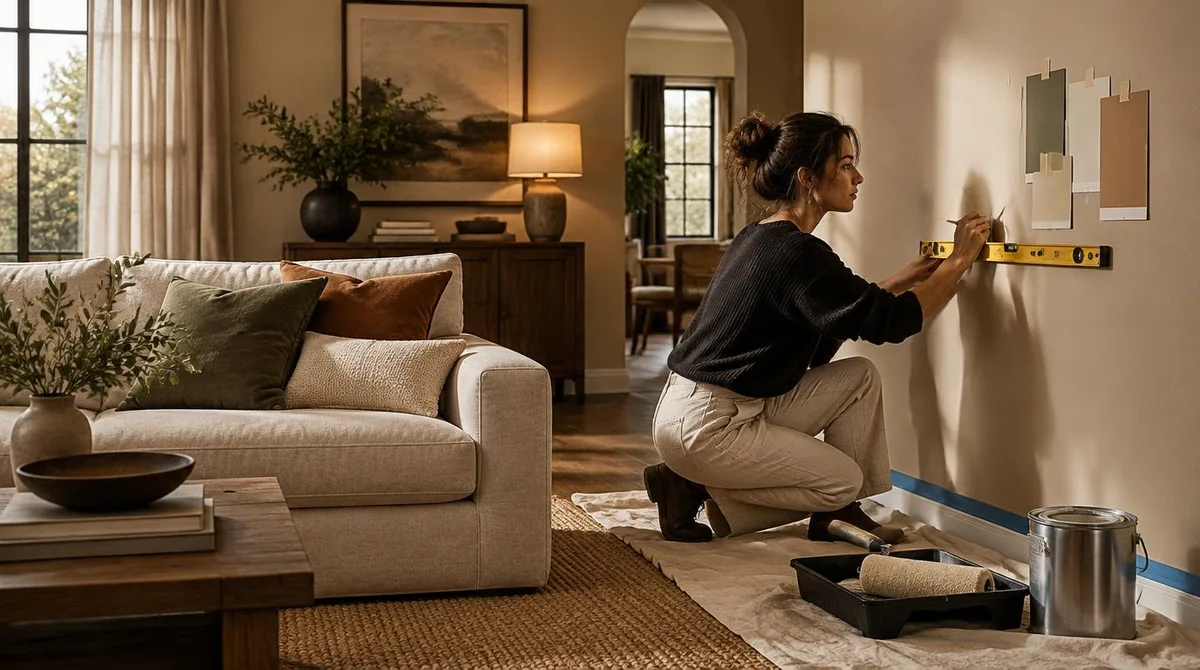
Paint is the largest continuous surface in a room, so it sets the tone before a single object registers. It is also the cheapest transformation available per square meter, which is why nearly every low-budget redesign starts at the walls. Two decisions matter more than the specific color name on the swatch.
First, decide whether the room should feel larger or more contained. Light, low-contrast colors push walls outward visually. Deeper, unified colors pull a room inward and make it feel deliberate — a dark, saturated room with matching trim reads as a choice, not a compromise. Second, paint the ceiling and trim into the decision. A ceiling in a soft version of the wall color, or trim in the same tone, removes the visual chatter that makes rooms feel busy.
The second-biggest paint win is the furniture itself. A mismatched set of secondhand pieces becomes a coordinated set when three of them share one color. Paint is the cheapest way to buy that coordination.
What does proportion actually mean, and how do you get it right?
Proportion is the relationship between the size of your furniture and the size of your room, and between the pieces themselves. It is the reason a small sofa in a big room can look more expensive than a large sofa in the same space — it leaves the room air to breathe, and air reads as luxury. Getting it right costs nothing but measuring tape and restraint.
- Measure the room, then measure every piece before it enters. Write the numbers down. Most proportion mistakes are simply unmeasured purchases.
- Keep sightlines open. If a piece blocks the view from the door to the window, the room will feel crowded no matter how good the piece is.
- Vary heights. A room where everything sits at the same level looks flat; one tall element — a plant, a floor lamp, a shelf — gives the eye a place to travel.
- Leave negative space. Empty wall and bare floor are not unfinished; they are the frame that makes the furniture legible.
One tailoring trick transfers directly from clothes to rooms: hemming changes everything. A curtain that kisses the floor instead of pooling, or hanging at the right height above a window frame, costs the same fabric and looks twice as considered. The same logic applies to rug placement and art height — small adjustments of position, zero dollars.
How do you thrift like a designer instead of a bargain hunter?
Thrift strategy is the third pillar, and it works only when the first two are already decided. Shopping before you know the color and proportion plan is how rooms fill with random objects. Shopping after is how rooms fill with the right ones.
The discipline is a list. Before you go, write down the exact gaps: a lamp, a side table, something tall for the corner. Buy only from the list, and buy the best-constructed version of each item you can find rather than the most of anything. A single well-made chair outlasts four flimsy ones and looks calmer. If you are unsure how to tell the difference with your eyes, our guide to judging quality with your eyes covers the tells — joinery, weight, finish — that separate durable from disposable. We covered a connected angle in Designer Shoes Decoded: What Fit, Craft and Price Actually Tell You.
Secondhand sourcing also fits the wider logic of buying less and choosing better. It keeps serviceable objects in use instead of in landfill, which is the same instinct behind sustainable fashion, and it rewards patience: the right piece at the right price usually takes weeks of looking, not one afternoon. For a deeper dive into sourcing, see our guide to finding design objects worth reaching for. For related coverage, see Where to Find Design Objects Worth Reaching For.
What this means: a sequence you can actually follow
Our analysis of what makes budget rooms succeed comes down to order of operations. Doing the steps out of order is what produces the cluttered, half-finished look people blame on money.
- Edit first. Remove everything the room does not need. This is free and instantly improves proportion.
- Paint second. Choose one color decision — walls, trim, ceiling — and commit to it across the room.
- Arrange third. Place what remains using the proportion rules above: measured, heights varied, sightlines open.
- Shop last, and only from a written list of gaps. One good secondhand piece per trip beats a cart of almosts.
- Light the room last. Warm, layered lamps at eye level soften everything that came before and cost less than any furniture upgrade.
The sequence matters because each step narrows the next. Paint narrows what furniture will work. Arrangement narrows what you still need. The list narrows what you buy. By the time money enters the picture, it has very little left to fix — which is exactly the point.
Where the budget line really sits
The honest takeaway is that design on a dime is not about finding cheap versions of expensive things. It is about recognizing that most of what makes a room look designed — color unity, proportion, editing, patience in sourcing — was never for sale in the first place. The expensive rooms you admire are usually just disciplined rooms with a bigger furniture invoice attached.
There is also a quieter benefit. A room you planned yourself teaches you your own taste in a way no purchase can, and taste is the one asset that transfers to the next room, the next flat, the next budget. Start with the paint can and the measuring tape. The rest follows.