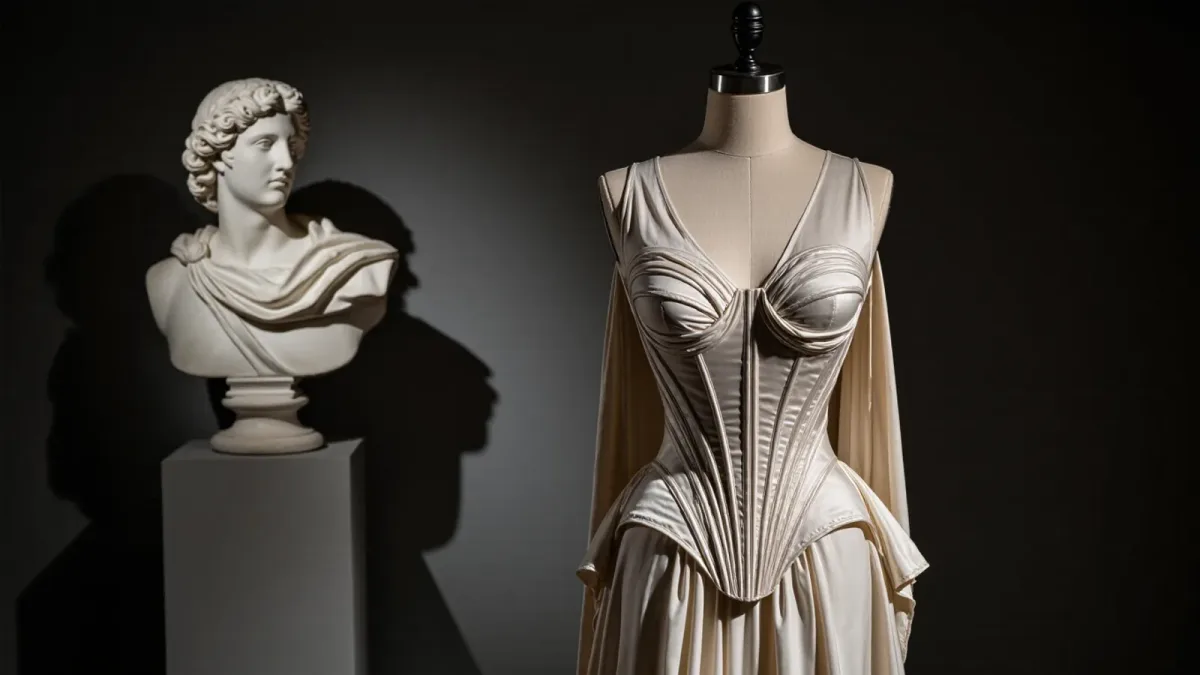
The Met Gala took place on Monday, May 4, 2026, opening the Costume Institute's spring exhibition "Costume Art," which explores depictions of the dressed body across the Metropolitan Museum of Art's collection, per The Met. The exhibition — the first in the Institute's new Condé M. Nast Gallery — pairs garments with paintings and sculpture, and its opening gave the carpet its brief: dressing the body as an art-historical subject.
That brief produced a specific kind of carpet. Themes about cinema or eras invite costume; a theme about the dressed body invites construction. The reads that matter from this gala are structural — corsetry exposed as architecture, drapery quoting classical sculpture, garments designed to be photographed beside Old Masters rather than against a step-and-repeat.
Why this theme flattered craft over costume
The exhibition's curatorial logic — clothing shown as a peer to painting — raised the bar for the room. Houses with in-house ateliers and couture lines could answer with actual technique: hand-draped bodices, embroidery scaled like relief carving, silhouettes built on historical foundations re-engineered in modern materials. Celebrity styling that reached for literal costume read flat by comparison, because the wall text was literally about the garment's own status.
Related stories: The Met Gala 2026 Theme Is Here — and It Puts Clothes Inside the Museum · Men's Fashion Month June 2026: Milan Is Midway, Paris Is Next.
The money angle most coverage skips
The gala is the Costume Institute's funding engine, self-funded by the event, and the exhibition it opens runs for months with public hours from May 10. For the industry, the exhibition is the longer game: it puts dress at the center of the museum's art-historical narrative through the summer, which translates into archival loans, renewed interest in atelier craft — and a season of education content that benefits any brand able to demonstrate construction credibly.
The carpet's construction bias also reset the stylists' calculus for the rest of the season's big rooms. With the theme rewarding atelier evidence — visible boning, hand drapery, embroidery with a paper trail — houses capable of documenting craft had a clean edge, and the after-party circuit that followed amplified exactly those garments. Museum professionals, meanwhile, got the exhibition they had argued for: dress treated as primary material, with labels crediting makers rather than merely lenders.
The takeaway
Skip the rankings and use the exhibition. If the gala's construction-heavy carpet convinced you that fashion's interest has shifted back to make and material, the galleries from May 10 are where that argument is made in fabric — with labels that name the ateliers, fibers and techniques behind each look.