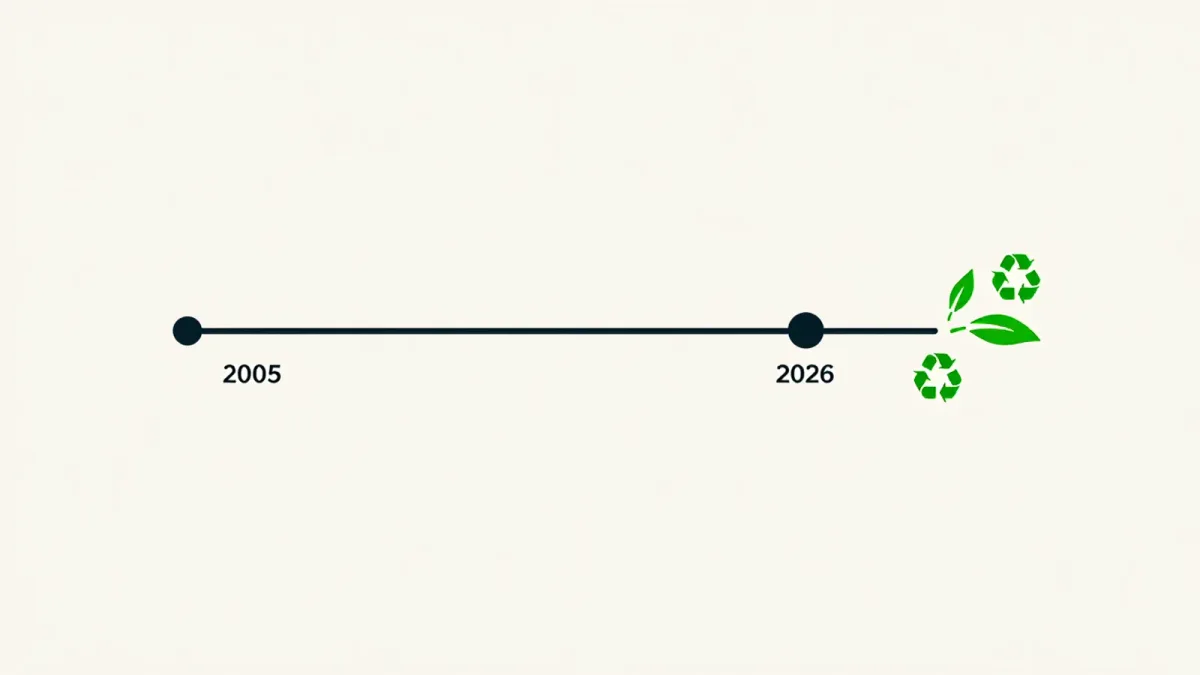
H&M announced a new designer collection with Stella McCartney in April 2026 — a reunion 21 years after the British designer's 2005 capsule for the Swedish retailer, per The Zoe Report's April 2026 fashion coverage. The announcement lands amid a crowded collab season that also saw H&M peer brands pairing with houses across the market.
The 2005 original matters more than nostalgia suggests. McCartney's capsule — no leather, no fur, at H&M prices — was an early argument that designer credibility and mass distribution could coexist, and it set the template for the two-decade run of designer-for-the-high-street drops that followed. The 2026 reunion tests how that template holds when the designer in question has spent the interim building a business explicitly around materials innovation and animal-free luxury.
What a 2026 McCartney × H&M has to prove
The first collaboration was about access; the sequel will be judged on consistency. McCartney's own label markets vegan leather alternatives, regenerated polyester and traceable viscose, so any 2026 capsule is expected to carry materials claims — which makes it a live test of whether a fast-fashion supply chain can meet a designer's stated standards. Watch for certified fiber content, not marketing words: recycled-content percentages and named certifications are the readable part of the label.
Related stories: Matthieu Blazy's Chanel Couture Debut: Lightness as a Strategy · Meryll Rogge's Marni Debut Rewired the House's Code in One Show.
The collab economics, briefly
Designer capsules for mass retailers work as mutual advertising: the designer buys reach, the retailer buys credibility, and both buy press. The risk is old news. Twenty-one years on, H&M needs the reunion to feel like a position statement rather than an anniversary — which is likely why the pairing surfaced in April with sustainability framing per the announcement, ahead of a retail window that typically runs weeks, not months.
For the designer, the reunion arrives with her own brand's materials platform two decades more developed than in 2005 — regenerated textiles, mycelium and grape-based leather alternatives, and published fiber policies. That maturity is exactly what the collaboration will be measured against: a 2005-grade capsule of conventional polyesters under a sustainability-framed announcement would hand critics an easy story, while certified-fiber pieces would give the fast-fashion collab format its most credible sustainability test yet.
The takeaway
If you plan to buy, decide by the fabric label, not the logo. Pieces in certified recycled or traceable natural fibers will hold up as more than memorabilia; polyester novelty items are press-release inventory. And check the care tag — a washable, hard-wearing piece from this drop will outlast the hype cycle that produced it.