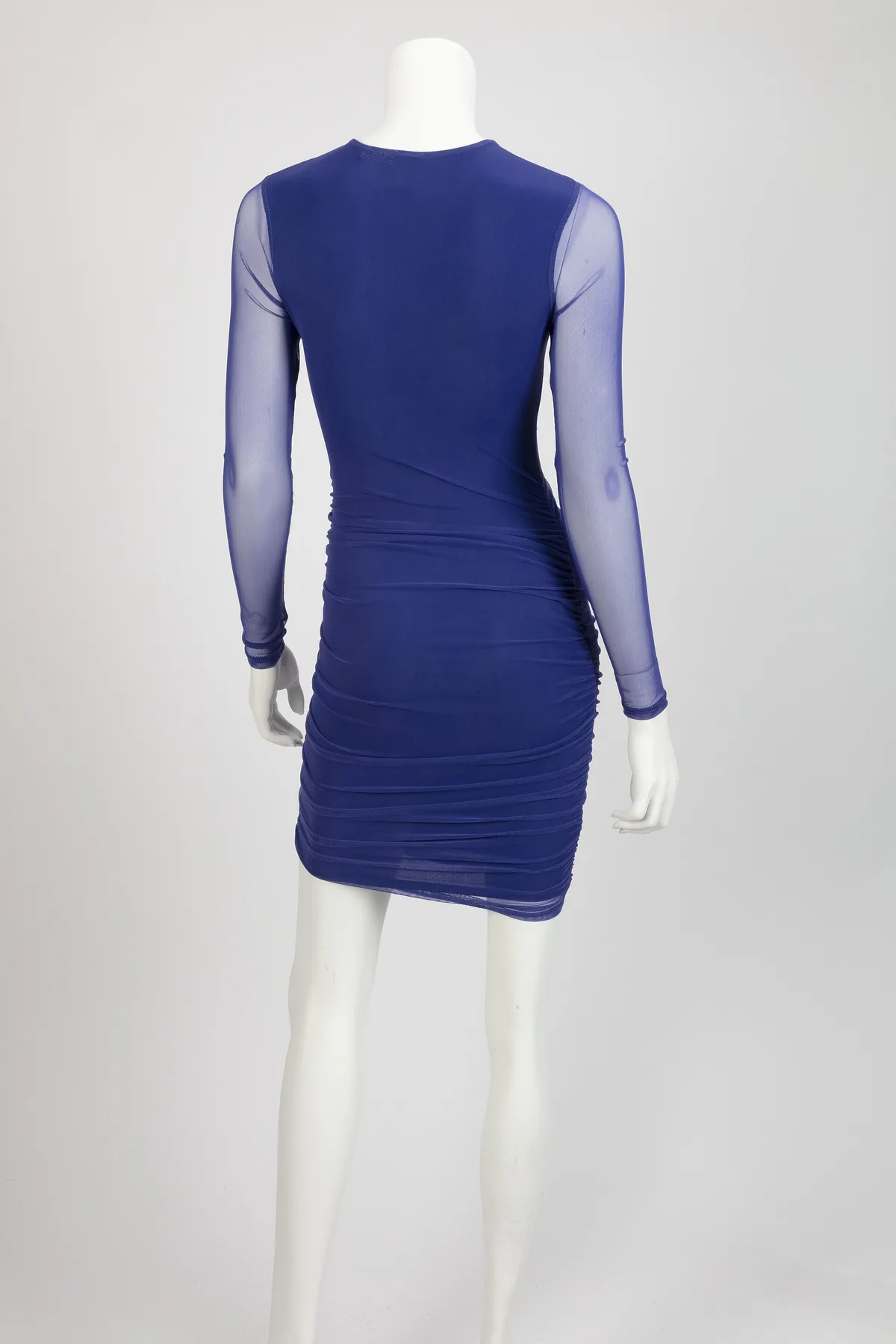
Sustainable fashion news this season is mostly about rules, not runways. The biggest stories are regulatory: greenwashing crackdowns in Europe, labor-protection deadlines in New York, and resale data that keeps growing. The key qualification is that most brand claims still rest on the brand's own word, so a careful reader checks the certification or document behind every promise.
One concrete anchor for the field: the United Nations' 2030 Agenda, adopted by all member states in 2015, set 17 Sustainable Development Goals as a shared blueprint for people and the planet, and fashion's environmental reporting increasingly borrows that framing. According to the UN's own SDG platform, the goals are an "urgent call for action by all countries" that ties economic growth to climate and ocean protection — the same trade-offs fashion now negotiates collection by collection.
Why does sustainable fashion news sound so vague?
Because the word itself is vague, and that vagueness is documented. As Wikipedia's entry on sustainability explains, sustainability generally refers to a state in which environment, economy and society continue over a long period, but scholars still argue over the economic dimension, and some critics call the term a buzzword. The 1987 Brundtland Report's definition — meeting present needs without compromising future generations — remains the most quoted, and the loosest.
For a buy-less reader, that fuzziness has a practical consequence. When a brand says "sustainable" in a press release, the word carries no fixed meaning. The reporting worth your time names the mechanism instead: a certification, a registry entry, a legal requirement. The certificate does not cover the dye house — that kind of sentence is the tell of serious coverage.
Our analysis: treat sustainable fashion news as a translation exercise. The headline is the claim; the paragraph below it should tell you who verified it. Readers following this should also see Fashion News Without the Noise: How to Build a Diet That Lasts.
What are regulators actually doing about greenwashing?
The most consequential shift is legal. European rules now target unfounded environmental claims directly, and fashion is a primary target because its marketing leans hardest on eco-language. We covered the mechanics in our piece on EU greenwashing rules hitting fashion claims, which explains what a brand must now document before it prints a leaf logo on a hangtag.
In the United States, the action is more labor-side than label-side. New York's Fashion Workers Act reached its compliance deadline, moving accountability from fabric sourcing to the people in the supply chain's front rows — models and creative workers. The two regulatory tracks share one logic: move sustainability from aspiration to obligation, with penalties attached. We covered a connected angle in New York's Fashion Workers Act Reaches Its Compliance Deadline.
What this means for readers: the news cycle now rewards specificity. A brand announcement without a named standard, a date and an enforcement body is a press release, not news.
Which brand initiatives hold up under scrutiny?
Brand initiatives fall into three honest categories. First, material substitutions — recycled fibers, lower-impact tanning, fiber-to-fiber recycling, which means breaking a used garment back into raw fiber and spinning it again. Second, durability work, which rarely makes headlines but decides whether a garment justifies its price per wear; our explainer on pilling in premium fabrics shows why construction, not marketing, is the real sustainability test. Third, resale and rental programs, which extend a garment's working life without demanding new production.
The trap is the fourth category: pledges. Net-zero targets dated decades out, signed by consortiums, verified by nobody in particular. The dictionary definition compiled by Cambridge is a useful filter here — its examples all describe practices that are ecologically and economically sustainable at once, in the present tense. A pledge deferred to 2050 describes neither.
When evaluating an initiative, ask three questions. What is the baseline being reduced from? Who audits the result? What happens if the target is missed? Coverage that answers none of these is describing a mood, not a program.
How does resale fit into the sustainability story?
Resale is the part of the beat with the hardest numbers, because platforms publish transaction data rather than intentions. Market projections put secondhand fashion on a steep growth curve toward the end of the decade, and our reporting on ThredUp's 2026 resale report lays out the scale. For the buy-less reader, the mechanism matters more than the total: every resale transaction substitutes an existing garment for a new purchase, which is the closest thing fashion has to genuine decoupling of growth from resource use.
That said, resale is not automatically virtuous. Shipping, packaging and returns carry their own footprint, and luxury resale adds authentication costs. The honest framing is that resale is better than replacement, not that it is impact-free.
How should a reader build a sustainable fashion news diet?
Practical steps, in order. Follow the regulatory calendar first — rules change behavior faster than campaigns do. Read certification registries directly when a claim cites one; the registry is the primary source, and retellings drift. Weight construction reporting over pledge reporting, because a garment that lasts twice as long halves its footprint without a single certification. And keep a running distinction between a brand's claim and a verified fact; the first is attributed to the brand, the second to a document.
It also helps to know how the beat itself works. Our piece on how fashion news gets made traces a story from runway to headline, and the sustainability beat follows the same pipeline — press release, verification, context, verdict. Sources that skip the verification step are the ones most likely to pass greenwash through unfiltered.
What should you watch next, and what remains unknown?
Watch enforcement, not announcements. The regulatory frameworks are now written; the question is whether regulators pursue named brands and whether courts uphold the findings. Watch whether durability standards — repairability scores, minimum garment lifetimes — move from proposal to law in major markets. And watch the resale platforms' own data, which arrives quarterly and describes behavior rather than intention.
What remains unknown is the hard part. The evidence base for measuring sustainability is still settling; as the sustainability literature summarized on Wikipedia notes, there is no fixed definition of sustainability indicators, and the metrics — benchmarks, audits, certification systems — keep evolving. That means no reader, however careful, can yet rank a brand's true footprint with confidence. The news will tell you what has been claimed, what has been regulated and what has been sold. What a garment actually cost the planet is still, for now, an estimate.