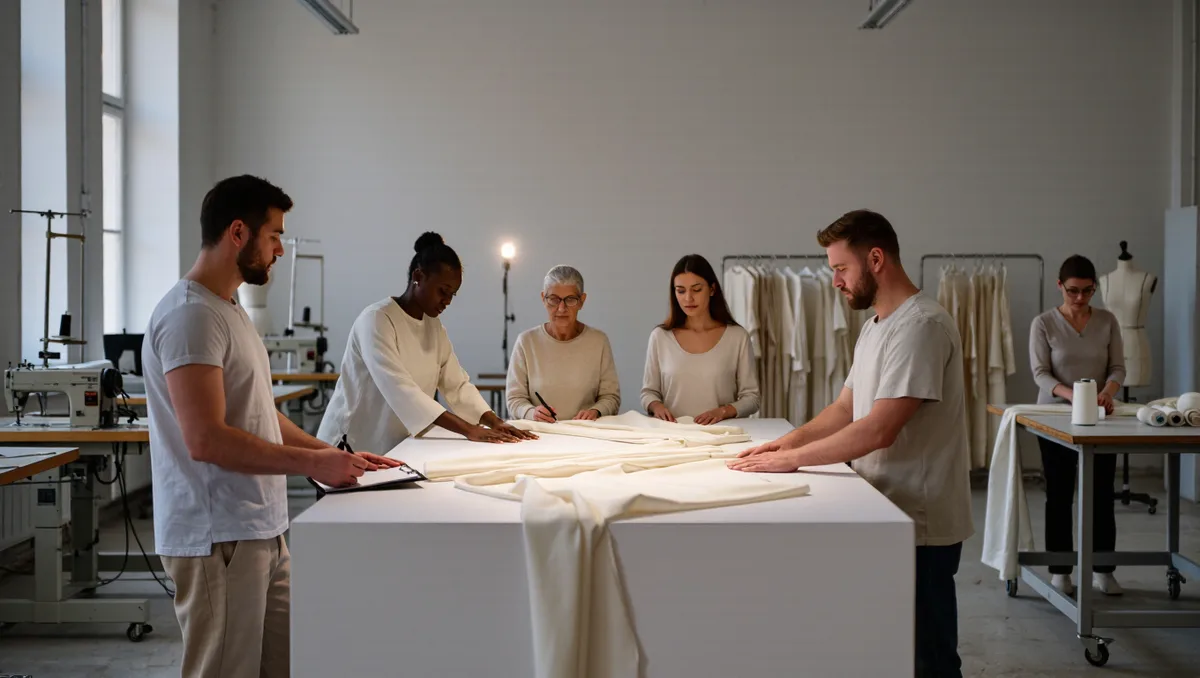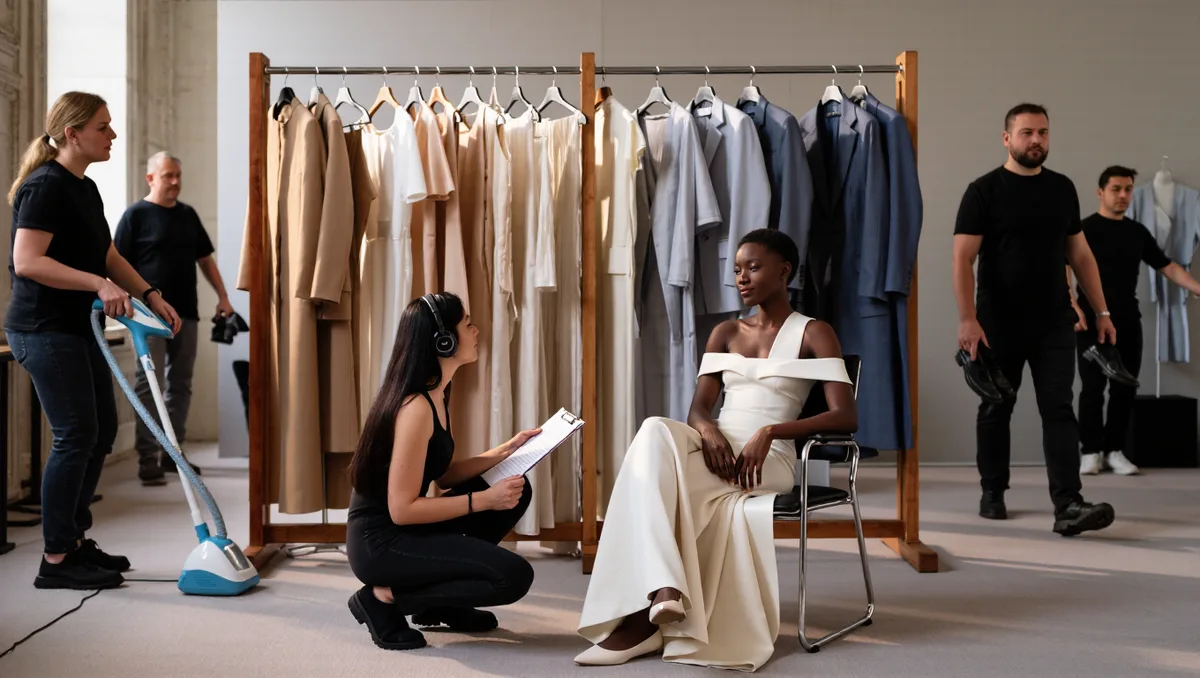
A look goes down the runway once. Within hours, it exists in three forms: a garment in a backstage rack, a photograph on a wire service, and a paragraph on a news site. The gap between the first and the third is where fashion news is actually made.
Understanding that pipeline matters for anyone who reads fashion news latest coverage and wonders why one show produces ten different stories. The clothes do not change between those stories. The vantage point, the deadline and the commercial incentives do. Readers who know the machinery can weigh a headline against the thing it describes. This connects to our earlier piece, New York's Fashion Workers Act Reaches Its Compliance Deadline.
This piece follows one unnamed show from the front row to the published story, and marks the points where the account can drift from the garment. For a companion piece on choosing what to read, see Fashion News Without the Noise: How to Build a Diet That Lasts, which covers the reader's side of the same pipeline. Readers following this should also see Fashion News Without the Noise: How to Build a Diet That Lasts.
What happens before a single story is written?
The show itself is the middle of the process, not the start. Weeks out, brands send invitations, lookbooks under embargo and seating charts. Editors decide who goes: a critic for a collection worth close reading, a news reporter for a market-relevant house, a stringer for everything else. The seat is a signal. Front row placement is a commercial negotiation as much as an editorial one, and seasoned readers know to discount for it.
Inside the venue, the writer works against two clocks. The show runs for minutes. The story needs to move within hours, sometimes within minutes for a celebrity or appointment angle. So the critic watches twice at once: once for the clothes, once for the lede. A premiere trained in an atelier reads dart placement and grain line; a wire reporter reads the hemline a headline can carry. Both are legitimate readings. They are not the same reading.
Backstage adds a second layer. Designers give quotes, stylists explain references, publicists steer. Everything said there is sourced to the brand's own account of itself, which is useful context and never independent verification. A serious story keeps that distinction visible.
How does a review differ from a news report?
Three genres leave a show, and they answer different questions.
- The review asks whether the collection works as design. It describes the clothes precisely — cut, fabric, construction — and then places them against the house's history and the designer's stated intent. Verdicts are supported by what was actually shown, look by look.
- The news report asks what happened and why it matters commercially. An appointment, a departure, a debut, a pivot toward a new category. The clothes are evidence; the business is the story.
- The aggregate asks what the season means. It reads many shows together and draws trends. It is the furthest from the garments and the most vulnerable to drift, because each step of summary is a step away from the seam.
The same collection can honestly produce all three. Trouble starts when a genre borrows the authority of another: a trend piece written as if the writer had examined construction, or a review that reports a brand's own framing as established fact. The reader's check is simple. Does the piece describe specific looks, or only the mood around them?
Where do the images come from, and what do they carry?
Photography shapes fashion coverage as much as prose does. Wire photographers shoot the runway under house lighting on tight schedules; brand teams supply their own imagery later, framed exactly as the house wants. The two rarely match. A look photographed mid-stride reads differently from the same look styled and lit for a lookbook, and a story built on brand-supplied images inherits the house's framing with them.
Production tools are also changing what a story can assemble on deadline. Runway, the AI image and video generator, markets a creative toolkit that bundles mood boards, storyboarding, virtual try-on and visual effects alongside its video models, and states that it is used by more than 60 million people globally, according to the company's product page. Whatever one thinks of generated imagery, the practical effect on fashion media is real: mood boards, animatics and restyled shots can now be produced inside a news cycle rather than commissioned over weeks. That speed is useful for illustration. It is not a substitute for a photograph of a garment that existed on a runway, and coverage that blurs the two owes the reader a label.
Our analysis: the image is where fashion reporting is most exposed. A caption should tell you who shot a picture and where it came from. When it does not, treat the picture as the brand's argument, not the publication's evidence.
What happens between the draft and your screen?
Once written, a story moves through editing, headline writing and packaging — and each step narrows it. A headline compresses a considered review into a phrase that must work in a feed. Sub-editors trim for length. Search and social teams choose the framing that travels. None of this is dishonest by itself, but every compression is a small translation, and translations lose the qualifiers first. "The strongest collection of the season" survives the cut; "the strongest of the season, with the caveat that half the looks read as repeats" does not.
Speed adds pressure. The first story filed often sets the frame that later stories inherit, because aggregation rewards the earliest clear account. A correction travels slower than the claim it fixes. This is why a careful reader waits for the second-day piece: the writer has slept, compared notes, and can say what the first draft could not.
Commercial structure sits underneath all of it. Publications depend on access, and access is granted by the brands being covered. The honest outlets handle this by separating criticism from commerce and labeling partnerships. The reader's job is to notice which is which — a skill the same discipline that separates a glued lining from a stitched one applies to media: look at how the thing is made.
How should a reader weigh a fashion headline?
A short checklist, drawn from the pipeline above.
- Check the genre. Is this a review, a report or an aggregate? Each earns trust differently.
- Look for the garments. Specific descriptions of cut, fabric and construction signal someone who watched the clothes. Vague mood language signals someone who watched the room.
- Separate the brand's claims from the publication's findings. A designer's stated references are context, not verification.
- Note the timing. First-cycle coverage is fast and provisional. Second-day analysis is slower and usually better.
- Ask who benefits. Access journalism is not a scandal; unlabeled access journalism is.
The machinery of fashion news is neither corrupt nor neutral. It is a system with incentives, deadlines and seats that can be bought. Read it the way a maker reads a garment: from the inside seam out.
What this means for the buy-less reader
The evidence above establishes a pipeline with real drift between garment and headline, and leaves one thing unknown: how much of the season's coverage any single reader actually needs. For most people who buy less and choose better, the answer is less than the industry publishes — a considered diet of reviews and business reporting, read with the checklist above, covers what the runway decides. The rest is atmosphere, and atmosphere is not news.