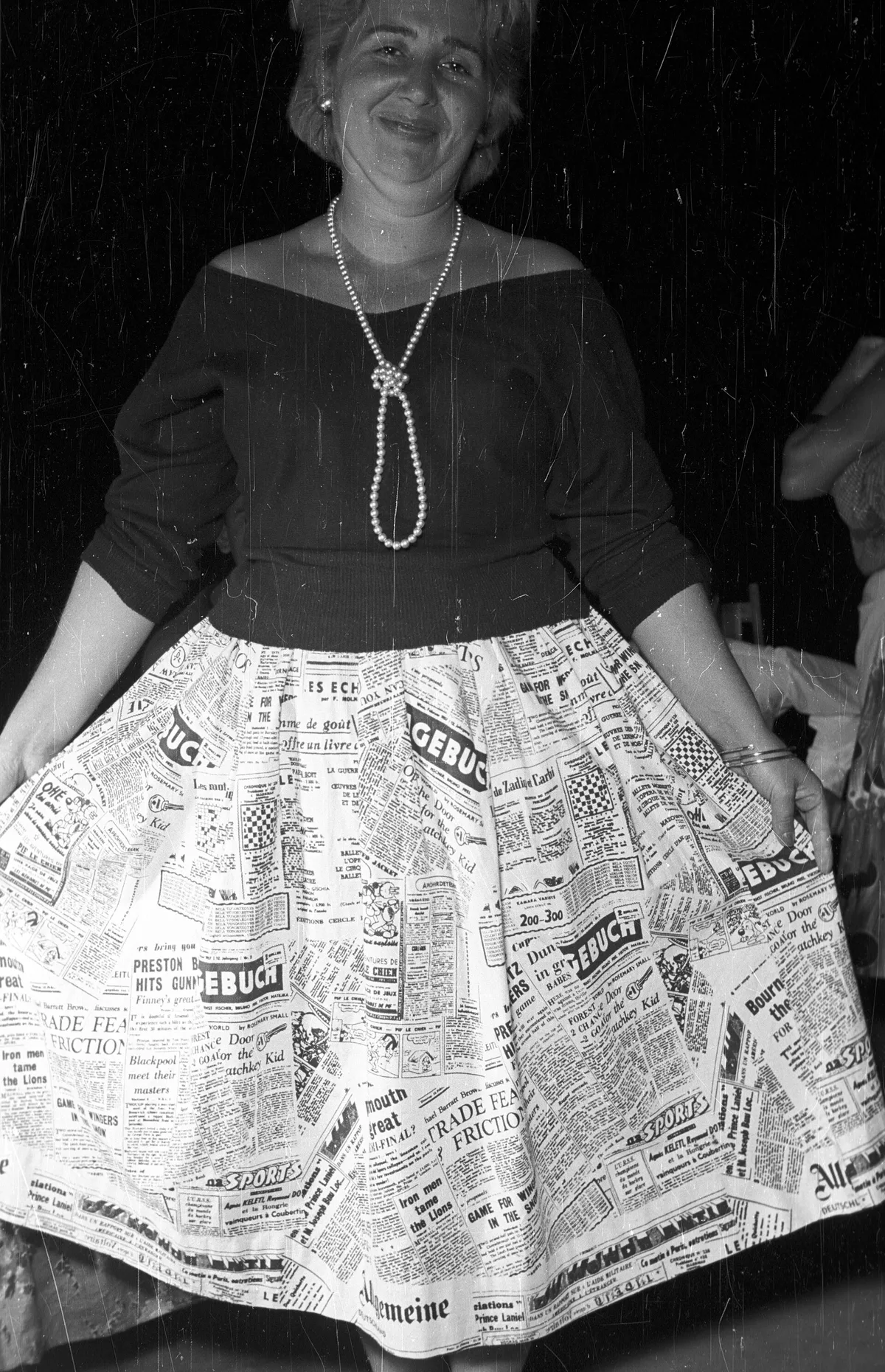
The fashion newspaper began as a record of who wore what, not a judgement of why. Over roughly a century it moved from society columns — lists of gowns at balls, weddings and opera nights — to a form of criticism that treats clothing as design, industry and culture at once. That shift changed what readers get: not just a description of a dress, but an argument about who made it, how, and what it says.
The change matters for anyone who buys less and chooses better. A society page tells you a gown was worn. A review tells you whether the seaming, silhouette and material justify the claim being made for them. Reading the second kind of coverage is a skill, and it has a history worth knowing.
Where did fashion coverage actually begin?
Fashion writing grew out of the society pages of general-interest newspapers. In the nineteenth and early twentieth centuries, dress was news because dress was status. Columns reported what guests wore to notable gatherings, which milliner made a hat, which house supplied a trousseau. The tone was descriptive and deferential. The writer's job was to name, not to judge.
This was journalism of proximity. It assumed its reader belonged to, or aspired to, the world it described. There was no analytical distance, because distance would have broken the social contract between the paper and its readers. The word mode itself has carried ideas of refinement and display since at least the 15th century; as Wikipedia's fashion entry notes, the French term dates to 1482, and the English sense of something "in style" arrived in the 16th century. Dress as social signal is old. Dress as something to be critically reviewed is comparatively new.
What changed when couture became news?
Two things pushed fashion reporting toward criticism. First, the rise of haute couture as an organised system. In France, the term is technically restricted to houses that are members of the Chambre Syndicale de la Haute Couture in Paris — a point the Wikipedia entry makes plainly — and that formal structure gave journalists something to review: a seasonal body of work, made by named designers, shown to an invited audience. A collection is arguable in a way a ball gown is not.
Second, photography. Once collections could be reproduced, coverage stopped depending on a reader's imagination. A critic could compare what a designer showed this season against last, could point to a sleeve set wrong or a fabric chosen well. Description became evidence. The modern review — look by look, verdict by verdict — rests on that technical base.
How did description turn into judgement?
The critical turn happened as fashion writers stopped writing for the dressing room and started writing for the culture section. A review now asks questions a society column never posed: Who is this collection for? What is it referencing? Will it be produced, or is it spectacle? The best critics describe the clothes precisely first — the cut of a shoulder, the weight of a cloth — and only then place them in context. Precision is what separates criticism from flattery.
That discipline is exactly what a careful reader should demand today. When a house claims a garment is sustainable or artisanal, the useful question is not whether the language is beautiful but whether the document behind it holds. Our guide to EU greenwashing rules and fashion claims makes the same point from the regulatory side: the claim is only as good as what substantiates it. Readers following this should also see EU Greenwashing Rules Hit Fashion Claims This September.
What does a fashion newspaper look like now?
The modern fashion desk is broader than its ancestor could have imagined. Look at the section structure of Vogue's fashion coverage: celebrity style, street style, models, designers, trends and sustainability sit side by side, alongside a vintage directory that treats secondhand shopping city by city. That range is the century's legacy. Fashion coverage now spans commerce, labour, environment and culture — the same garment read through several lenses at once.
It also spans geography differently. The traditional fashion capitals — New York, Paris and Milan, which Wikipedia identifies as the acknowledged top three, with Tokyo, London and Los Angeles often named as a second tier — still anchor the calendar. But coverage has migrated online, and the entry notes that the geographic weight of cities has become somewhat less central with the spread of digital media. The fashion newspaper is now less a place than a feed. This connects to our earlier piece, New York's Fashion Workers Act Reaches Its Compliance Deadline.
What this means for how you read fashion coverage
Our analysis: the century's lesson is to read for evidence, not adjectives. Three habits serve well.
- Check what was actually shown. A review that names fabrics, construction and cut gives you something to weigh. One that offers only mood gives you nothing.
- Separate the house's claim from the writer's verdict. A brand's own description of its work is a claim, not a fact. Good coverage keeps the two apart.
- Watch what is missing. If a piece praises a collection without asking whether it will be produced or at what cost, it is closer to the old society page than it looks.
The through-line from society column to criticism is a steady widening of the question asked about clothes. First: what was worn? Then: who made it? Now: what does it cost — in money, in materials, in labour — and how long will it last? That final question is where this publication lives, and where the design conversation and the luxury conversation meet. A fashion newspaper that cannot answer it is keeping the old habit of naming without judging.
Why the history still matters
Knowing where fashion journalism came from helps you spot which kind you are reading. The society page survives, in softer forms, wherever coverage repeats a press release. The critical tradition survives wherever a writer counts what will actually be produced rather than applauding what walked the runway. Read the second kind. It is the one that respects both the clothes and the reader.